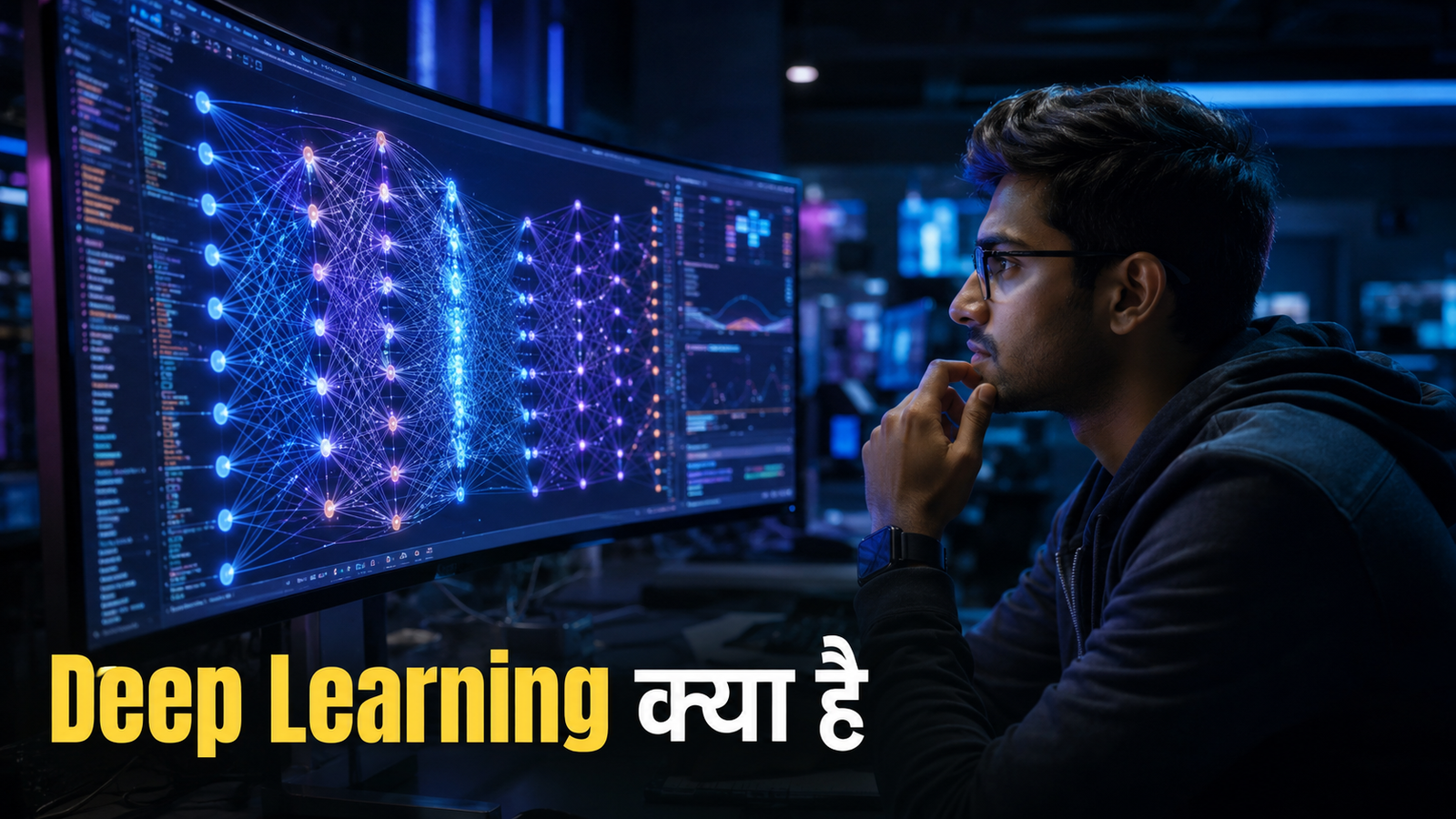
Deep Learning, Machine Learning का एक advanced subset है जो human brain की structure से inspired है। यह Artificial Neural Networks use करती है — specifically बहुत सारी layers वाले networks — data से automatically features सीखने के लिए।
Machine Learning में आप हज़ारों बिल्लियों की photos देते हैं और model patterns सीखता है।
लेकिन Deep Learning में? आप लाखों photos देते हैं और एक deep neural network automatic रूप से यह सीखती है कि पहले edges detect करो, फिर shapes, फिर textures, फिर body parts, और finally — बिल्ली। किसी ने उसे यह steps नहीं बताए। उसने खुद सीखा।
यही है Deep Learning की असली power।
👉 यह भी पढ़ें: AI Engineer कैसे बनें? योग्यता, Skills, Salary और Career Guide
Neural Network कैसे काम करता है — बिल्कुल आसान भाषा में
Deep Learning को समझने के लिए Neural Networks को समझना ज़रूरी है।
Human brain में करोड़ों neurons होते हैं जो एक दूसरे से connected होते हैं। जब हम कुछ सीखते हैं, तो यह connections stronger होते हैं।
Artificial Neural Networks इसी idea को computer में implement करते हैं।
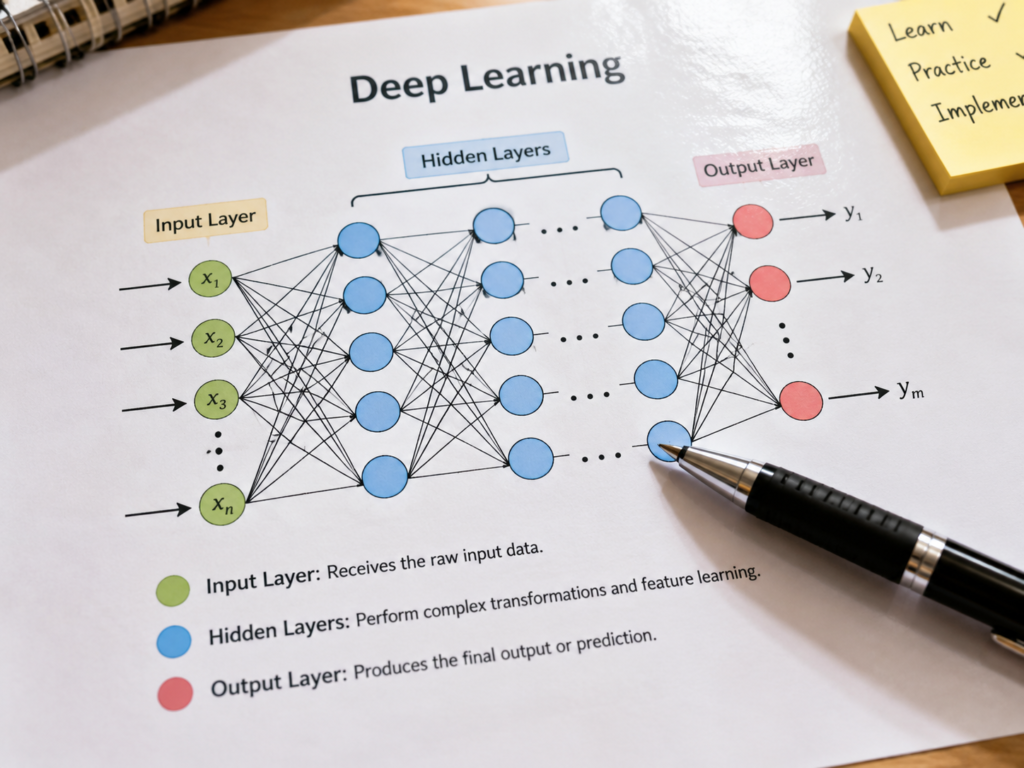
एक Neural Network में तीन तरह की layers होती हैं।
Input Layer — यहाँ data enter होता है। अगर आप एक image process कर रहे हैं, तो हर pixel एक input node है।
Hidden Layers — यह वो layers हैं जो data को process करती हैं, patterns ढूंढती हैं, और features extract करती हैं। Deep Learning में यही layers बहुत सारी होती हैं — इसीलिए “deep।”
Output Layer — Final answer यहाँ आता है। Image recognition में यह “बिल्ली है” या “कुत्ता है” बताएगा।
हर layer के neurons एक दूसरे से weights के through connected होते हैं। Training के दौरान यह weights adjust होते हैं ताकि model सही answers दे सके। इस process को Backpropagation कहते हैं।
Deep Learning और Machine Learning में क्या फर्क है
यह confusion बहुत common है। लोग इन दोनों को interchangeably use करते हैं, जो technically गलत है।
सबसे बड़ा फर्क feature extraction में है।
Traditional Machine Learning में आपको manually decide करना पड़ता है कि model को कौन से features देने हैं। जैसे email spam detection में आप manually decide करते हैं — word count, specific keywords, sender reputation, etc। यह human expertise माँगता है।
Deep Learning में यह step automatic होता है। आप raw data दो — photos, audio, text — और network खुद ही relevant features ढूंढ लेता है। इसीलिए images, videos, और natural language जैसे complex data के लिए Deep Learning बहुत ज़्यादा effective है।
दूसरा फर्क data requirement का है। Traditional ML थोड़े data पर भी अच्छा perform करता है। Deep Learning को बहुत ज़्यादा data चाहिए — लाखों examples — तभी वो अपनी full potential पर आता है।
तीसरा फर्क computational power का है। Deep Learning बहुत computationally expensive है — इसीलिए GPUs (Graphics Processing Units) इसके लिए ज़रूरी हो जाते हैं।
👉यह भी पढ़ें: Coding सीखने के लिए Best Programming Language कौन-सी है?
| Feature | Machine Learning | Deep Learning |
|---|---|---|
| Feature Extraction | Manual (Human करता है) | Automatic (Model खुद करता है) |
| Data Requirement | कम data में भी चलता है | बहुत ज़्यादा data चाहिए |
| Computational Need | Normal CPU sufficient | GPU ज़रूरी |
| Interpretability | Relatively explainable | Black box |
| Best For | Structured/tabular data | Images, Audio, Text, Video |
| Training Time | कम | बहुत ज़्यादा |
Deep Learning के Types — कौन सा Network किस काम आता है
Deep Learning एक umbrella term है। इसके अंदर कई तरह के architectures आते हैं, हर एक specific problems के लिए।
Convolutional Neural Networks (CNNs)
Images और videos के लिए यह most popular architecture है। CNN इस तरह design की गई है कि वो images में spatial patterns efficiently detect कर सके।
आपका phone का Face Unlock, Instagram का photo filter, cancer detection X-ray से, self-driving cars की vision — यह सब CNN की देन है।
Recurrent Neural Networks (RNNs) और LSTMs
जब data sequential होता है — जैसे text, speech, या time series — तो RNNs use होती हैं। इनकी खास बात यह है कि ये previous information को “याद” रख सकती हैं।
Google Translate, speech recognition, और music generation में RNNs और उनकी improved version LSTMs (Long Short-Term Memory) use होती हैं।
Transformers
यह 2017 में Google ने introduce किया था और इसने AI की दुनिया बदल दी। ChatGPT, Gemini, Claude — यह सब Transformer architecture पर based हैं।
Transformers की खास बात “Attention Mechanism” है जो model को यह समझने देता है कि sentence में कौन सा word दूसरे words के साथ ज़्यादा related है।
Generative Adversarial Networks (GANs)
यह दो networks का combination है — एक Generator जो नई content बनाता है, और एक Discriminator जो real और fake में फर्क करता है। दोनों एक दूसरे को improve करते रहते हैं।
Deepfake videos, AI art generation, और synthetic data creation में GANs use होती हैं।
Autoencoders
यह networks data को compress करके फिर reconstruct करती हैं। Image denoising, anomaly detection, और data compression में useful हैं।
Deep Learning की Real-Life Applications
Deep Learning सिर्फ research labs में नहीं है — यह हर जगह है।
Healthcare में क्रांति
Google DeepMind का AlphaFold model ने protein structure prediction की जो problem 50 साल से unsolved थी, उसे solve कर दिया। यह medical research के लिए groundbreaking है।
Hospitals में AI systems X-rays, MRIs, और CT scans को analyze करके cancer, tumor, और अन्य diseases को early stage में detect कर रहे हैं।
यह भी पढ़ें: Machine Learning क्या है? आसान भाषा में पूरी जानकारी
Natural Language Processing
आप जो ChatGPT से बात करते हैं, जो Google Search में टाइप करते हैं और autocomplete देखते हैं, जो Voice Assistant से commands देते हैं — यह सब Deep Learning based NLP है।
Self-Driving Cars
Tesla, Waymo, और अन्य companies की autonomous vehicles real-time में cameras और sensors से data process करती हैं Deep Learning से — obstacles detect करना, road signs पढ़ना, pedestrians identify करना।
Entertainment और Content
Netflix का recommendation system Deep Learning use करता है। Spotify को पता है आप Monday morning को क्या सुनना चाहते हैं। YouTube automatically videos caption करता है। यह सब Deep Learning है।
Cybersecurity
Banks और payment companies Deep Learning से fraud transactions को milliseconds में detect करती हैं — patterns जो humans कभी manually नहीं देख सकते।
👉 यह भी पढ़ें: AI Engineer कैसे बनें? Complete Career Guide
Deep Learning कैसे सीखें
यहाँ honest बात करना ज़रूरी है। Deep Learning, Machine Learning से ज़्यादा challenging है। इसके लिए एक solid foundation चाहिए।
Prerequisites — पहले यह होना चाहिए:
Python में comfortable होना ज़रूरी है। अगर Python नहीं आती तो पहले वो सीखें।
Mathematics — Linear Algebra (matrices, vectors), Calculus (derivatives, gradients), और Statistics (probability, distributions) — यह तीनों समझना ज़रूरी है। Deep level पर नहीं, लेकिन conceptually clear होना चाहिए।
Machine Learning की basics भी पहले समझ लें क्योंकि Deep Learning उसी पर build होती है।
Learning Path:
पहले 3-4 महीने Python और Mathematics पर invest करें। फिर Andrew Ng का Deep Learning Specialization Coursera पर करें — यह दुनिया का सबसे recommended course है।
इसके बाद TensorFlow या PyTorch में से एक framework choose करें और उस पर hands-on projects build करें।
Kaggle पर deep learning competitions में participate करें। शुरुआत में winning की उम्मीद नहीं रखें — सीखना goal है।
सबसे ज़रूरी बात:
Deep Learning में Google Colab आपका सबसे अच्छा दोस्त है। यह free GPU provide करता है, जिसका मतलब है आप बिना expensive hardware के भी deep learning experiments कर सकते हैं।
Best Resources और Courses
| Resource | Platform | क्यों Choose करें | Cost |
|---|---|---|---|
| Deep Learning Specialization (Andrew Ng) | Coursera | सबसे comprehensive course | Free audit |
| Fast.ai Practical Deep Learning | Fast.ai | Hands-on approach, top-down | Free |
| PyTorch Official Tutorials | PyTorch.org | Framework की official guide | Free |
| TensorFlow Developer Certificate | Coursera | Industry-recognized certification | Paid |
| Deep Learning Book (Goodfellow) | deeplearningbook.org | Academic reference | Free |
| Kaggle Learn — Deep Learning | Kaggle | Short practical exercises | Free |
| CS231n Stanford (CNN course) | YouTube | Best CNN course globally | Free |
- Fast.ai — Practical Deep Learning
- Andrew Ng Deep Learning Specialization
- PyTorch Official Documentation
- TensorFlow Official Tutorials
- Google Colab — Free GPU
Deep Learning Career और Salary
India में Salary
| Role | Experience | Annual Salary |
|---|---|---|
| DL Engineer (Fresher) | 0-1 साल | ₹6-10 लाख |
| ML/DL Engineer | 1-3 साल | ₹10-20 लाख |
| Senior DL Engineer | 3-6 साल | ₹20-45 लाख |
| Research Scientist | 4+ साल | ₹25-60 लाख |
| Principal AI Scientist | 7+ साल | ₹60 लाख – ₹2 करोड़ |
Abroad में:
USA में senior Deep Learning Engineers $150,000-$300,000+ annually कमाते हैं। Top AI companies जैसे OpenAI, DeepMind, और Google Brain में यह और भी ज़्यादा हो सकता है।
Top Hiring Companies:
Google DeepMind, Microsoft Research, Meta AI, Amazon AWS, NVIDIA, Tesla, Flipkart, Swiggy, और बहुत से Indian AI startups।
Deep Learning के Challenges और Limitations
Deep Learning जितनी powerful है, उतनी ही उसकी limitations भी हैं। इन्हें समझना ज़रूरी है।
Data Hunger सबसे बड़ी limitation है। Deep Learning models को train करने के लिए लाखों labeled examples चाहिए होते हैं। Medical जैसे fields में labeled data बहुत कम और expensive होता है।
Black Box Problem एक serious issue है। एक Deep Learning model ने क्यों यह prediction दी — इसे explain करना बहुत मुश्किल है। जब AI एक loan reject करता है या medical diagnosis देता है, तो “model ने ऐसा कहा” acceptable explanation नहीं है।
Computational Cost बहुत high है। Large Deep Learning models train करने के लिए thousands of GPUs और enormous electricity चाहिए। GPT-4 को train करने में estimated $100 million से ज़्यादा खर्च हुआ।
Adversarial Attacks एक interesting vulnerability है। एक human को invisible लेकिन carefully crafted noise add करके image में, आप एक DL model को completely fool कर सकते हैं — जैसे एक stop sign में छोटे changes करके self-driving car को confused करना।
Bias का issue भी real है। अगर training data biased है, तो model भी biased decisions लेगा।
FAQs
Q1. Deep Learning और Artificial Intelligence में क्या relation है?
AI एक broad field है जिसमें कोई भी technique शामिल है जो machines को intelligent बनाती है। Machine Learning उसका subset है। Deep Learning, Machine Learning का एक subset है। तो Deep Learning ⊂ ML ⊂ AI। सरल भाषा में — Deep Learning, AI का एक specific approach है।
Q2. क्या Deep Learning सीखने के लिए PhD ज़रूरी है?
नहीं। Research Scientist बनने के लिए PhD helpful है, लेकिन industry में Deep Learning Engineer बनने के लिए Bachelor’s या Master’s degree और strong practical skills काफी हैं। बहुत से successful DL Engineers self-taught हैं।
Q3. TensorFlow सीखें या PyTorch?
2026 में PyTorch research और academia में dominate कर रहा है, जबकि TensorFlow production deployments में popular है। Beginners के लिए PyTorch ज़्यादा intuitive है। Industry में दोनों की demand है, लेकिन PyTorch से शुरुआत करना better है।
Q4. Deep Learning के लिए GPU क्यों ज़रूरी है?
Deep Learning में बहुत सारी parallel mathematical calculations होती हैं। GPU इन्हें simultaneously handle कर सकता है जबकि CPU को sequentially करना पड़ता है। एक GPU, CPU से 100-1000x faster deep learning tasks complete करता है। शुरुआत में Google Colab की free GPU use करें।
Q5. Deep Learning से क्या कोई भी job मिल सकती है?
हाँ, लेकिन यह एक demanding skill है। Entry level position के लिए Python, Mathematics basics, कम से कम एक framework (PyTorch/TensorFlow), और कुछ solid projects का portfolio ज़रूरी है।
Q6. क्या Deep Learning भविष्य में और ज़्यादा important होगी?
बिल्कुल। Generative AI, autonomous systems, personalized medicine, और climate modeling — यह सब Deep Learning पर heavily dependent हैं और यह fields आने वाले दशकों में और ज़्यादा important होंगी।
Q7. India में Deep Learning career के लिए कौन से शहर best हैं?
Bengaluru सबसे ज़्यादा AI/DL jobs वाला शहर है। इसके बाद Hyderabad, Pune, और Delhi NCR आते हैं। Remote work options भी बढ़ रही हैं जिससे छोटे शहरों के candidates भी apply कर सकते हैं।
Q8. Deep Learning सीखने में कितना समय लगेगा job-ready होने में?
अगर Python और basic ML पहले से पता है, तो 8-12 महीने की dedicated learning से entry-level position के लिए ready हो सकते हैं। Fresh beginners के लिए 18-24 महीने realistic timeline है।
Deep Learning वो technology है जो science fiction को reality बना रही है। Cancer का early detection, climate change prediction, instant language translation, cars जो खुद चलती हैं — यह सब इसी की देन है।
2026 में Deep Learning experts की demand supply से बहुत ज़्यादा है। यह एक challenging field है, लेकिन जो लोग इसमें seriously invest करते हैं — time, effort, और consistency — उनके लिए career opportunities और salary दोनों exceptional हैं।
शुरुआत आज करें। Python install करें, Google Colab पर account बनाएं, और Andrew Ng का पहला lesson देखें। हर बड़ा AI researcher किसी न किसी दिन इसी जगह खड़ा था।
👉 यह भी पढ़ें: Data Scientist कैसे बनें? Complete Career Guide 2026
About the Author