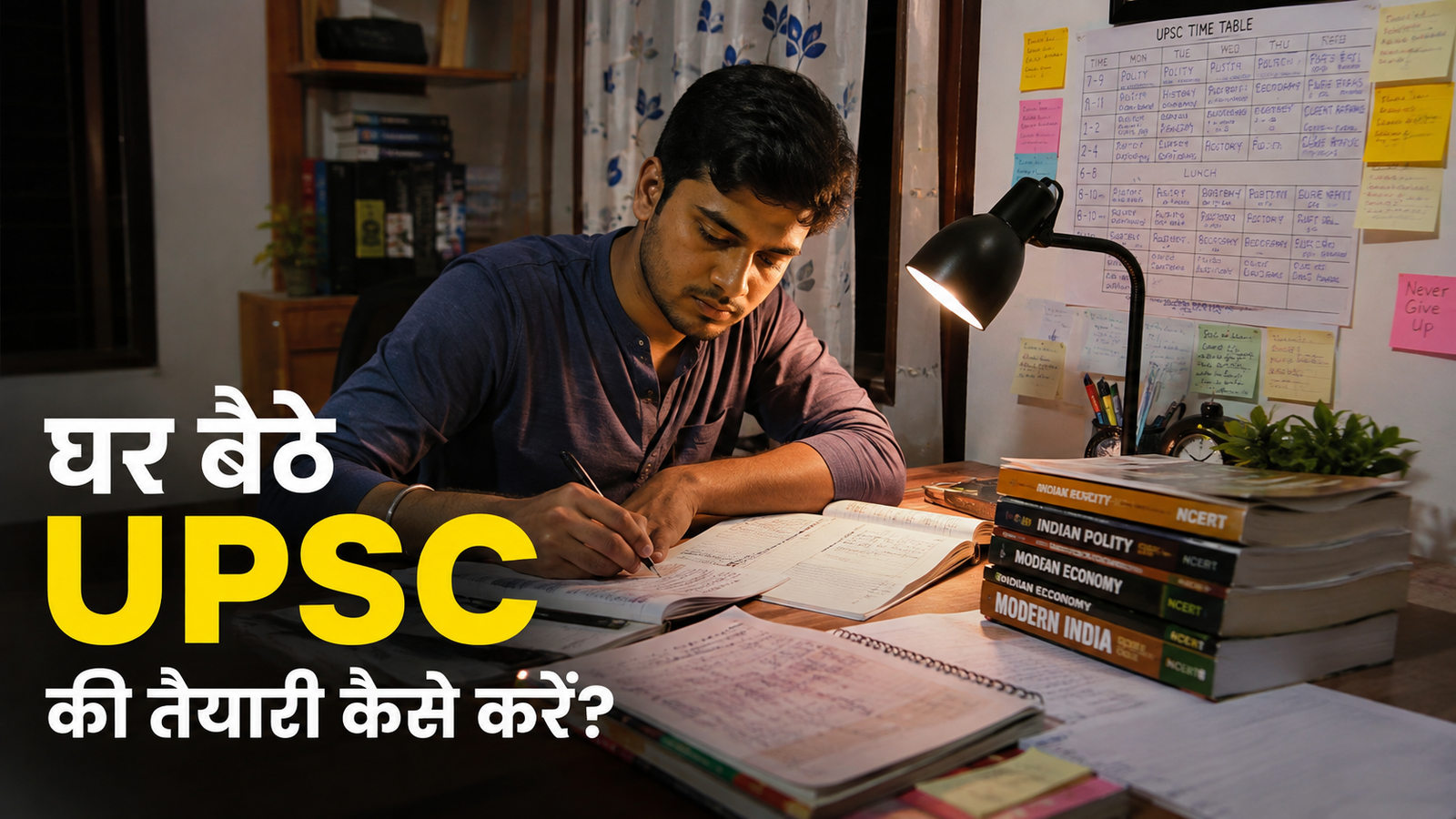
UPSC Civil Services Exam तीन stages में होती है।
Prelims — दो objective papers। GS Paper 1 (100 questions, General Studies) और CSAT Paper 2 (80 questions, Aptitude)। यह qualifying round है।
Mains — 9 papers. Essay, General Studies (4 papers), Optional Subject (2 papers), और दो language papers। यही असली exam है।
Interview (Personality Test) — 275 marks का। Board के सामने personality और knowledge दोनों test होते हैं। Total marks = Mains (1750) + Interview (275) = 2025 marks पर final merit बनती है। यह जानना ज़रूरी था क्योंकि preparation strategy इसी पर depend करती है।
घर बैठे UPSC की तैयारी — Step by Step
1. 📚 NCERT से शुरू करें — यह सबसे ज़रूरी है
UPSC की तैयारी में सबसे common गलती यह है कि लोग सीधे heavy reference books उठा लेते हैं।
पहले NCERT पढ़ें।
Class 6 से 12 तक की NCERT — History, Geography, Polity, Economics, Science — यही UPSC का foundation है। Prelims में 60-70% questions इन्हीं से आते हैं।
NCERT reading order:
- History: Classes 6- 12 (Medieval, Ancient, Modern India)
- Geography: Class 6-12 (Physical, Indian, World Geography)
- Polity: Classes 9- 12 (Democratic Politics)
- Economics: Class 9-12 (Understanding Economic Development)
- Science: Class 6-10 (General Science के लिए)
- Environment: Class 12 Biology के chapters
NCERT पूरी करने में 3-4 महीने लगते हैं। यह time waste नहीं है — यह investment है।
2. 📖 Subject-wise Best Books — एक list जो actually काम आती है
NCERT के बाद standard reference books चाहिए। लेकिन हर subject के लिए एक book काफी है — 5-6 books एक subject पर खरीदने की ज़रूरत नहीं है।
Polity: M. Laxmikanth — “Indian Polity” — यह book UPSC Polity का Bible है। हर aspirant पढ़ता है।
History: Bipin Chandra — “India’s Struggle for Independence” (Modern India के लिए) और NCERT Ancient/Medieval के लिए।
Geography: G.C. Leong — “Certificate in Physical and Human Geography” + NCERT
Economics: Ramesh Singh — “Indian Economy” + Economic Survey (हर साल government release करती है, free PDF)
Environment: Shankar IAS — “Environment” — Prelims के लिए सबसे popular book।
Current Affairs: The Hindu newspaper (daily) + Vision IAS या Drishti IAS की monthly magazine।
| Subject | Best Book | Pages (Approx) |
|---|---|---|
| Polity | M. Laxmikanth | 700+ |
| Modern History | Bipin Chandra | 550+ |
| Geography | G.C. Leong | 450+ |
| Economics | Ramesh Singh | 600+ |
| Environment | Shankar IAS | 400+ |
यह भी पढ़ें: Work From Home Job के फायदे और नुकसान
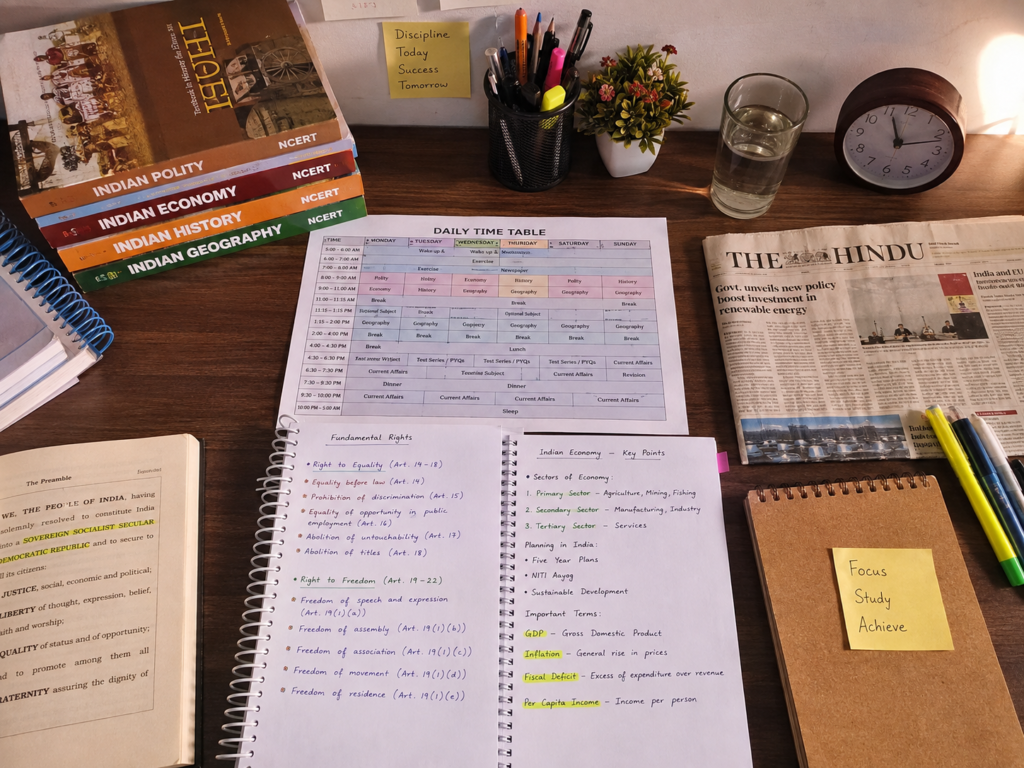
3. 🗓️ Daily Study Schedule — जो घर पर actually follow हो सके
Coaching में बैठे रहने की वजह से पढ़ाई होती है — घर पर self-discipline से होती है। इसीलिए एक realistic schedule बनाना ज़रूरी है।
Morning (6 AM – 9 AM): Newspaper पढ़ें — The Hindu या Indian Express। Notes बनाएं important current affairs के। यह सबसे productive time होता है।
Morning Session (9 AM – 1 PM): Core subject study। एक subject को depth से पढ़ें। Notes बनाएं अपने words में।
Break (1 PM – 2 PM): Lunch और rest।
Afternoon Session (2 PM – 5 PM): दूसरा subject। या पिछले दिन के notes revise करें। Practice questions solve करें।
Evening (5 PM – 6 PM): Walk या exercise — यह mandatory है। लंबी UPSC journey में mental health बहुत important है।
Night Session (7 PM – 10 PM): Optional subject या Essay practice. Previous year’s questions. Weekly revision।
Total: 10-12 घंटे daily। लेकिन quality study — phone बंद, distractions zero।
4. 💻 Free Online Resources — जो coaching की जगह ले सकते हैं
घर पर पढ़ने का सबसे बड़ा advantage यह है कि internet पर UPSC के लिए free resources की कोई कमी नहीं है।
YouTube Channels (Free और Excellent):
Drishti IAS — Hindi medium aspirants के लिए सबसे popular channel। Vikas Divyakirti sir की videos बहुत clear और informative हैं।
Study IQ — Current affairs और subject-wise coverage। Regular updates।
Unacademy UPSC — Free classes बहुत हैं। Live sessions और recorded lectures।
BYJU’s IAS — Conceptual clarity के लिए अच्छा।
Khan Academy — Economics और basic concepts के लिए।
Free Websites:
- NCERT की official site — ncert.nic.in पर सभी NCERT books free PDF में मिलती हैं।
- UPSC की official site — upsc.gov.in पर previous year papers और syllabus।
- PRS India — Parliament और policy updates के लिए।
- PIB (Press Information Bureau) — Government schemes और policies।
Free Test Series:
- Drishti IAS का free test series
- Unacademy का free mock tests
- Insights IAS का free prelims test series
5. 📝 Notes बनाना — घर पर UPSC की सबसे बड़ी ताकत
Coaching में teacher notes dictate करता है — आप वही लिखते हैं।
घर पर आप खुद notes बनाते हैं — और यही आपको edge देता है।
Notes कैसे बनाएं:
किसी भी topic को पढ़ने के बाद book बंद करें और अपने words में लिखें। यह active recall technique है जो memory को बहुत मज़बूत बनाती है।
Short, pointwise notes बनाएं। एक topic के 2-3 pages काफी हैं। Revision notes अलग रखें — ये exam के time सबसे काम आते हैं।
Current affairs के notes अलग diary में रखें — date के हिसाब से।
6. ✍️ Answer Writing Practice — Mains की असली चाबी
बहुत से घर पर पढ़ने वाले aspirants यह गलती करते हैं — reading बहुत, writing practice zero।
UPSC Mains में सिर्फ knowledge नहीं, presentation matter करती है। एक 250 words का answer 3-4 minutes में लिखना होता है।
Answer writing कैसे practice करें:
Daily एक answer लिखें। Previous year के questions उठाएं। Timer set करें — 7-8 minutes एक answer के लिए।
अपना answer खुद evaluate करें या किसी study partner को दिखाएं। Introduction, body, और conclusion — तीनों clear होने चाहिए।
Mains के लिए यह practice उतनी ही important है जितना syllabus पढ़ना।
यह भी पढ़ें: नौकरी करें या बिजनेस शुरू करें? सही फैसला कैसे लें
7. 🗞️ Newspaper पढ़ना — जिसे skip मत करना
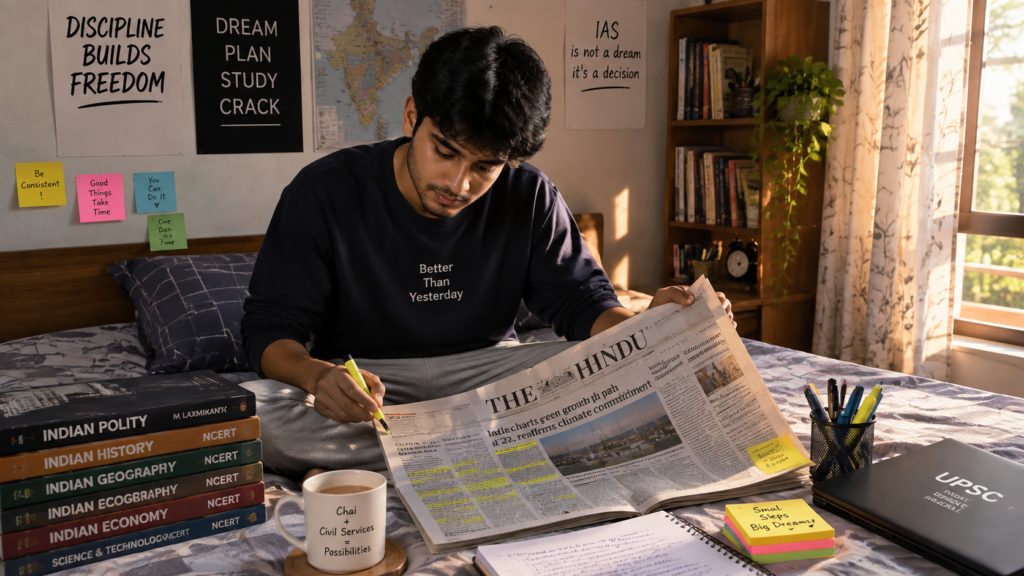
The Hindu या Indian Express — रोज़ पढ़ना UPSC की तैयारी का non-negotiable हिस्सा है। लेकिन पूरा newspaper नहीं पढ़ना है। UPSC के angle से relevant sections focus करें।
क्या पढ़ें:
- Editorial page — सबसे important
- National news — Government policies, schemes
- International news — India’s foreign relations
- Economy section — Budget, RBI policies
- Science & Technology — New discoveries, space missions
क्या skip करें:
- Sports news (जब तक कोई major event न हो)
- Entertainment
- Local crime news
- Stock market details
Daily newspaper पढ़ने में 45-60 minutes से ज़्यादा नहीं लगने चाहिए। Notes बनाएं important points के।
8. 📅 Optional Subject कैसे चुनें
UPSC Mains में एक Optional Subject होता है — जिसके 2 papers होते हैं, 500 marks के।
यह subject आपकी rank में सबसे बड़ा difference बना सकता है।
Optional चुनते समय इन बातों का ध्यान रखें:
Scoring potential — History, Geography, Public Administration, Sociology — यह traditionally good scoring optionals हैं।
Background और interest — जो subject पहले से पढ़ा हो उसमें depth आसानी से आती है। Literature options (Hindi, English) उनके लिए जो genuinely strong हों।
Available resources — कुछ optionals के लिए घर पर material ढूंढना मुश्किल है। Popular options के लिए YouTube पर भी content मिलता है।
Most Popular Optionals:
Geography, History, Public Administration (PSIR), Sociology, Anthropology
UPSC की तैयारी में सबसे बड़ी गलतियाँ
बहुत ज़्यादा resources — 10 books एक subject पर, 5 YouTube channels एक साथ। एक अच्छी book और एक अच्छा channel enough है।
Current affairs neglect करना — “पहले static syllabus complete करूंगा, फिर current affairs।” यह approach काम नहीं करती। दोनों साथ चलने चाहिए।
Previous year papers न देखना — UPSC के पिछले 10 साल के papers देखें। Pattern समझ में आएगा कि किस तरह के questions आते हैं।
Mock tests skip करना — real exam जैसा environment create करना ज़रूरी है। घर पर timer set करके full mock दें।
Mental health ignore करना — UPSC journey 3-5 साल की होती है। इस दौरान breaks लेना, hobby maintain करना, और family के साथ time — ये productivity बढ़ाते हैं, कम नहीं करते।
घर पर पढ़ने के फायदे जो coaching में नहीं मिलते
यह section important है क्योंकि बहुत से aspirants सोचते हैं coaching के बिना UPSC नहीं होगा।
अपनी pace से पढ़ सकते हैं — Coaching में एक speed होती है। घर पर जिस topic में कमज़ोर हैं उस पर ज़्यादा time दे सकते हैं।
पैसे बचते हैं — Delhi coaching का खर्च ₹2-5 लाख सालाना। यह पैसे books, test series, और अच्छे resources पर लग सकते हैं।
Home environment comfortable है — अपना room, अपना schedule, family support — यह productivity बढ़ाता हैं।
Revision better होती है — Coaching में notes dictated होते हैं। घर पर खुद बनाए notes याद ज़्यादा रहते हैं।
निष्कर्ष
घर बैठे UPSC की तैयारी न सिर्फ possible है — कई toppers यही करके IAS बने हैं।
ज़रूरी है — NCERT से strong foundation, एक-एक subject की standard book, रोज़ newspaper, daily answer writing, और consistent schedule।
Coaching एक tool है, guarantee नहीं। Self-discipline, सही resources, और long-term consistency — यह तीन चीज़ें coaching से ज़्यादा important हैं।
शुरुआत आज से करें। NCERT की Class 6 History उठाएँ और पहला chapter पढ़ें। यही UPSC journey का पहला कदम है।
यह भी पढ़ें: भारत में सबसे अच्छी सरकारी नौकरी कौन-सी है?
About the Author